

How to Plan an Indie Game (Step-by-Step Guide for Developers)
Planning an indie game is about applying production discipline early enough to prevent issues later.
In AAA studios, entire departments exist to manage production risk, milestone alignment, and scope control. In indie development, that responsibility often falls to one person, the developer.
Understanding how to plan an indie game properly requires looking at how large studios structure development, and adapting those principles to smaller teams.
The Game Design & Production Framework
Richard Lemarchand — A Playful Production Process
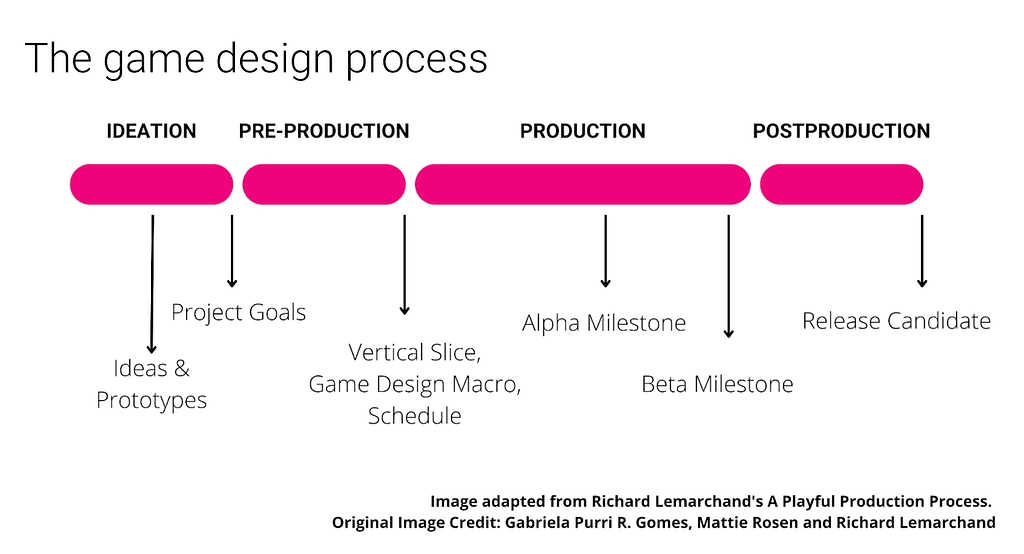
Most professional studios follow a structured production framework similar to the one described by Richard Lemarchand in A Playful Production Process:
- Ideation
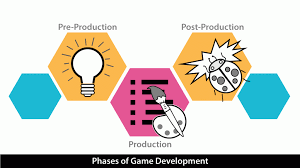
- Pre-Production
- Production
- Post-Production
This structure exists because unstructured creativity leads to stalled projects.
Let’s break this down from a solo developer perspective.
1. Ideation: Define Constraints Before Creativity Expands
In professional studios, ideation is constrained exploration.
Before development begins, producers ask:
- What is the target platform?
- What is the realistic scope?
- What technical risks exist?
- What makes this game different?
For an indie developer, this means documenting:
- Core gameplay loop
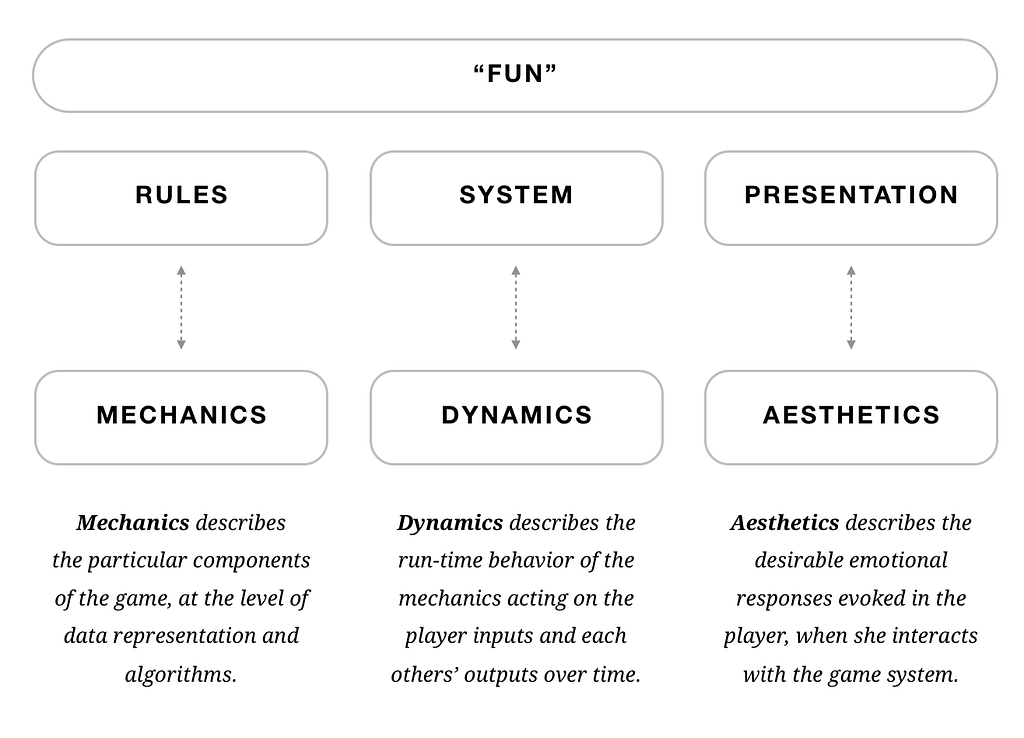
- Player experience goal (MDA)
- Target audience
- Scope boundaries (what will NOT be included)
Research in project management (PMI’s Project Management Body of Knowledge) consistently shows that unclear scope is the leading cause of project overruns.
Indie developers often underestimate this phase.
2. Pre-Production: The Most Critical Stage (And Most Skipped)
Pre-production is where most indie projects fail.
In AAA studios, this phase includes:
- Vertical slice development
- Risk assessment
- Milestone mapping
- Budget forecasting
- System dependency mapping
The goal is to validate feasibility and for solo developers, pre-production should include:
A. Vertical Slice
A small but representative sample of the final game:
- Core mechanics implemented
- Basic UI
- One complete gameplay scenario
This validates:
- Technical feasibility
- Fun factor
- Scope realism
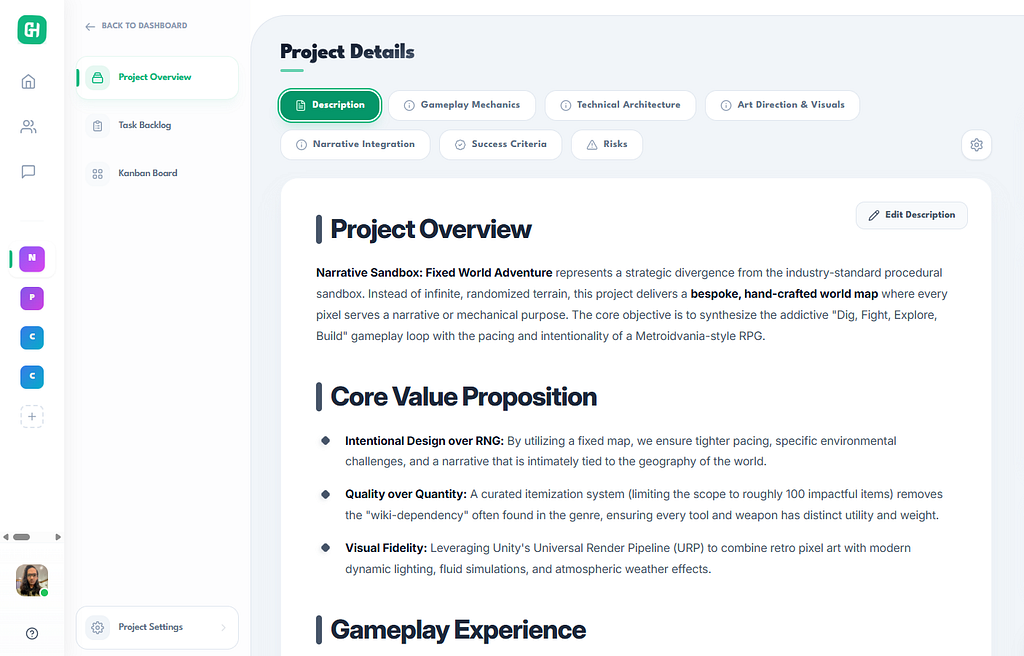
GDD generated by Arielle
B. System Breakdown
Break your game into systems:
- Combat
- Movement
- AI
- UI
- Audio
- Progression
- Save system
- Monetization (if applicable)
Then break systems into tasks.
C. Dependency Mapping
This is where production thinking becomes essential.
Example:
- You cannot finalize UI before core mechanics stabilize.
- You cannot balance enemies before AI logic is complete.
- You cannot polish performance before content is locked.
This sequencing is what producers manage in studios.
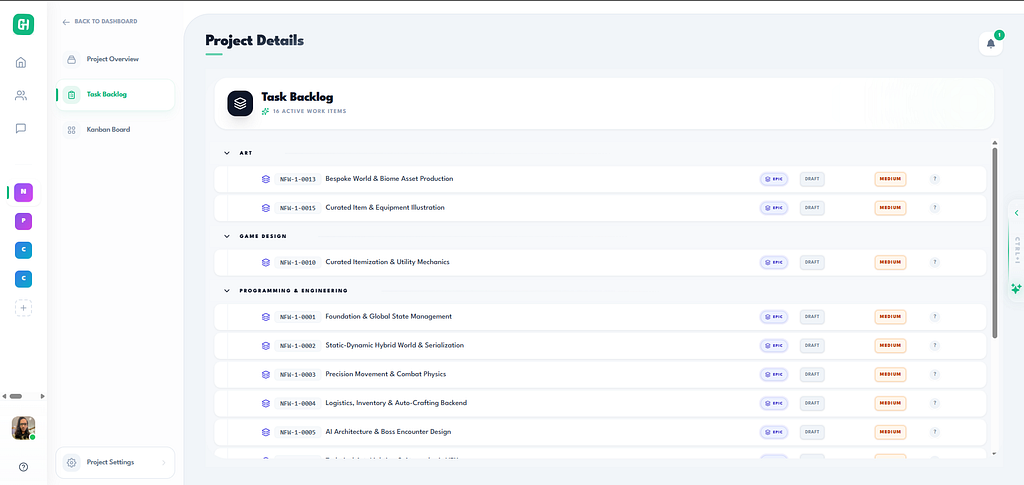
Project pipeline generated by Arielle
Modern tools like Arielle, an AI production copilot, help indie developers generate structured roadmaps from a game concept and automatically identify dependencies and sequencing gaps.
This replicates producer-level thinking in a solo workflow.
3. Production: Milestone-Based Execution
AAA studios do not “just build.”
They operate through milestone gates.
Typical structure:
- Alpha: Core systems functional
- Beta: Content complete
- Release Candidate: Polish & stabilization
For indie developers, define:
Alpha
- Core gameplay loop fully functional
- Basic UI implemented
- At least one playable level
Beta
- All planned systems integrated
- Content complete
- Playtesting begins
Release Candidate
- Major bugs fixed
- Performance optimized
- Store build ready
Milestones serve two purposes:
- Psychological momentum
- Scope control
Without milestones, indie projects expand indefinitely.
4. Post-Production: Planning for Shipping Early
In professional pipelines, release planning includes:
- Marketing timelines
- Certification requirements
- QA buffers
- Patch planning
- Platform submission deadlines
Indie developers should define:
- Target platform requirements
- Launch timeline
- Store page preparation schedule
- Community engagement milestones
Planning post-production during pre-production significantly reduces last-minute stress.
The Role of AI in Modern Indie Production
AI has accelerated asset creation, code generation, and prototyping.
However, research in workflow automation consistently shows that as execution speed increases, coordination becomes the bottleneck.
Indie developers now build faster than ever but planning complexity has not decreased.
This is where AI production tools like Arielle are positioned:
- Turning game ideas into structured roadmaps
- Mapping task dependencies
- Forecasting production gaps
- Maintaining context across humans and AI agents
Instead of replacing creativity, structured production protects it.
Common Planning Mistakes in Indie Development
- Expanding scope before validating core mechanics
- Skipping vertical slice validation
- Building features out of dependency order
- Treating planning as optional
- Ignoring post-launch requirements
Each of these is a production issue, not a creativity issue.